
Vol. XXIII.I
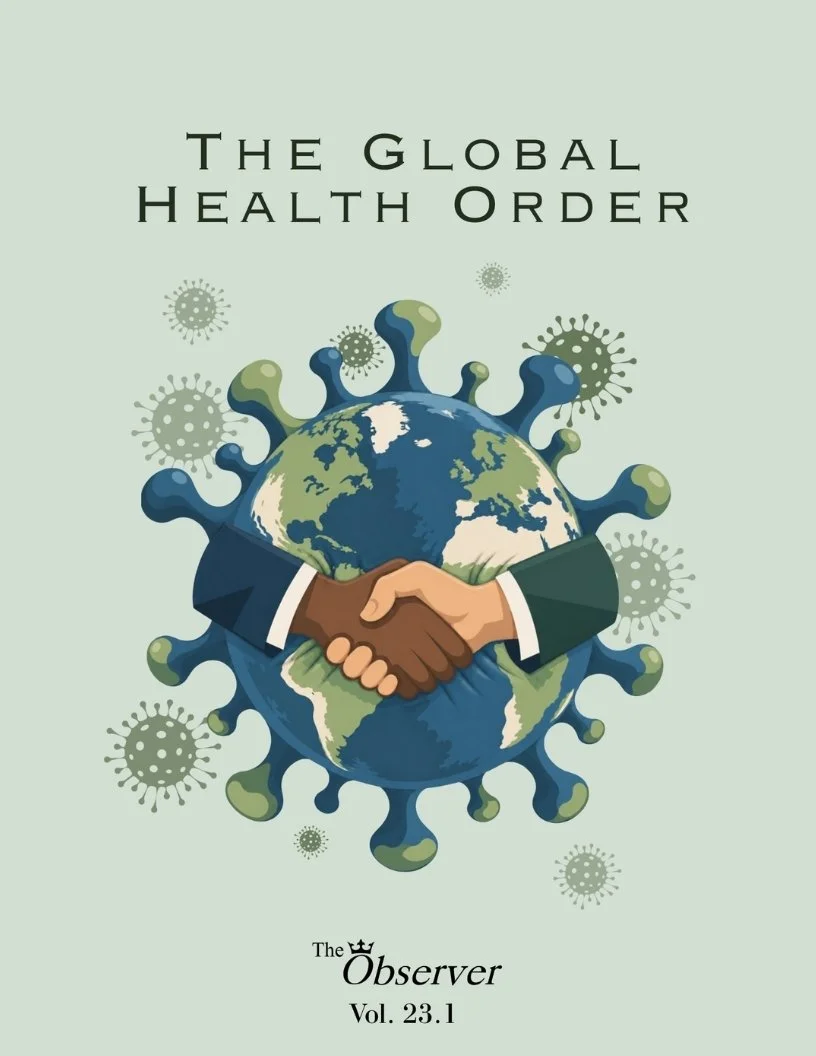
Health is both a driving and reactive force to international events. Population health is directly impacted by humanitarian crises. Pandemics and epidemics challenge diplomatic relations. Global power dynamics shape the social determinants of health. Given the transformative effects of health and healthcare on the international stage, The Observer seeks to investigate how health impacts and is impacted by both specific events and broader political trends. This issue, “The Global Health Order,” aims to explore the intersection of health and international relations in the context of political events that have occurred this summer.
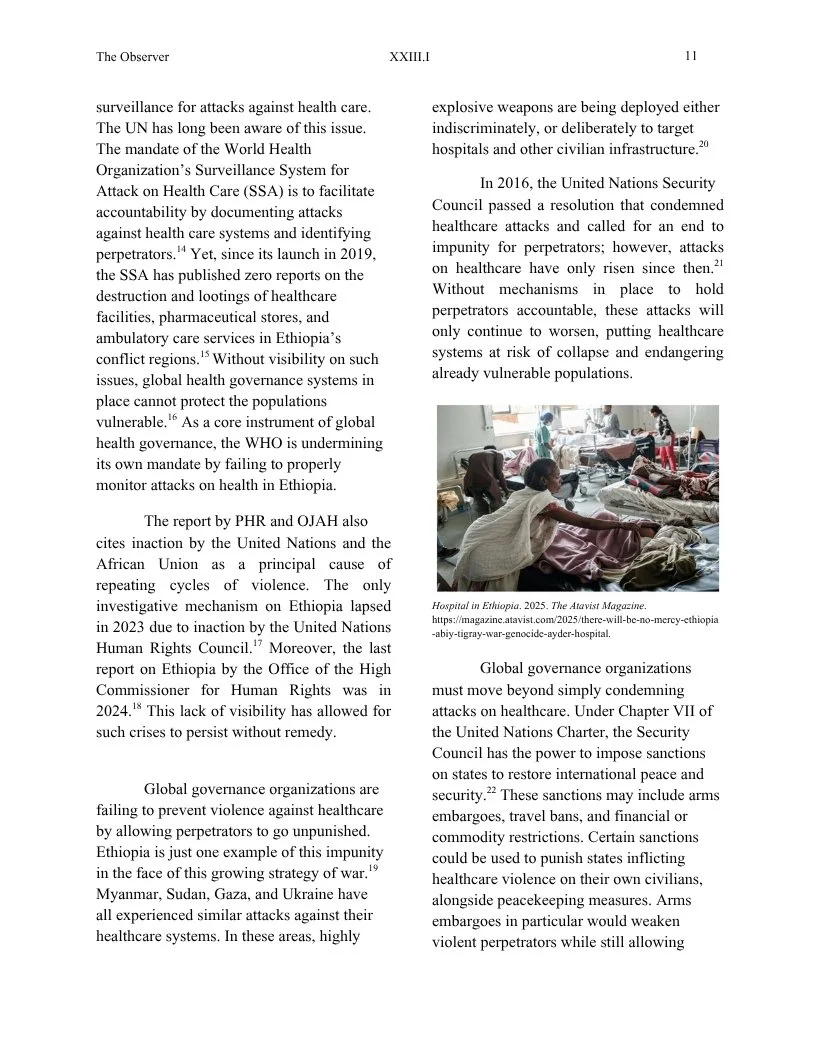
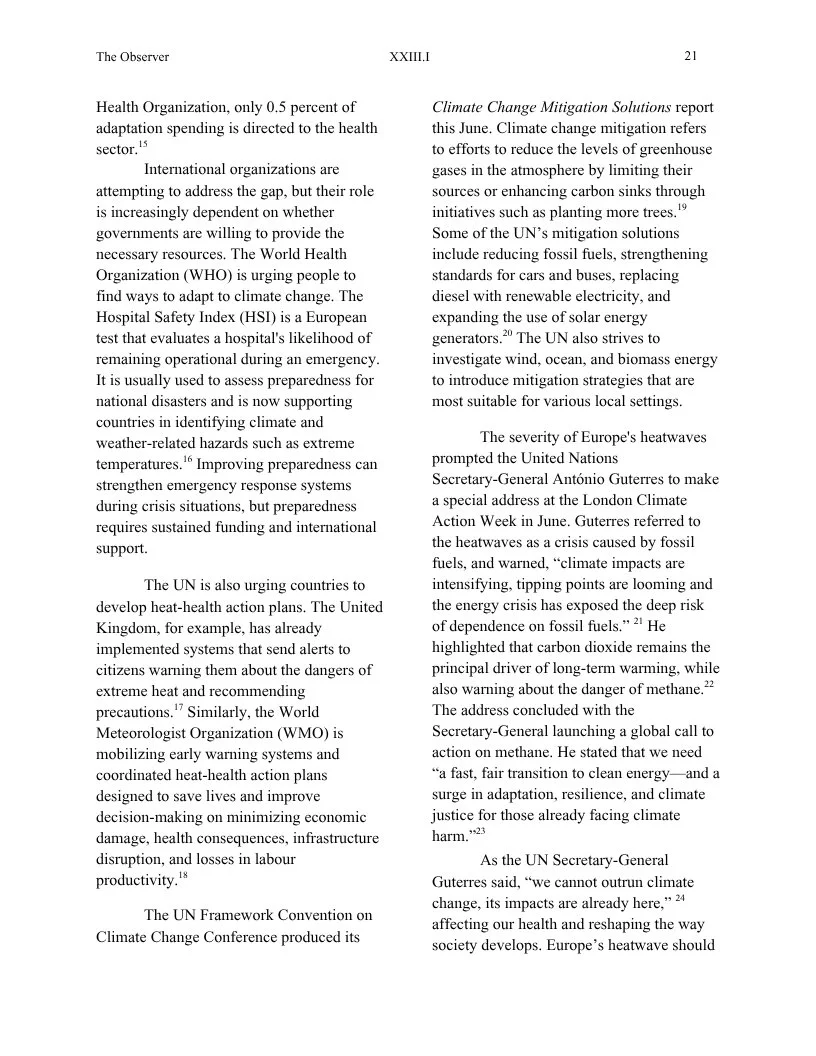
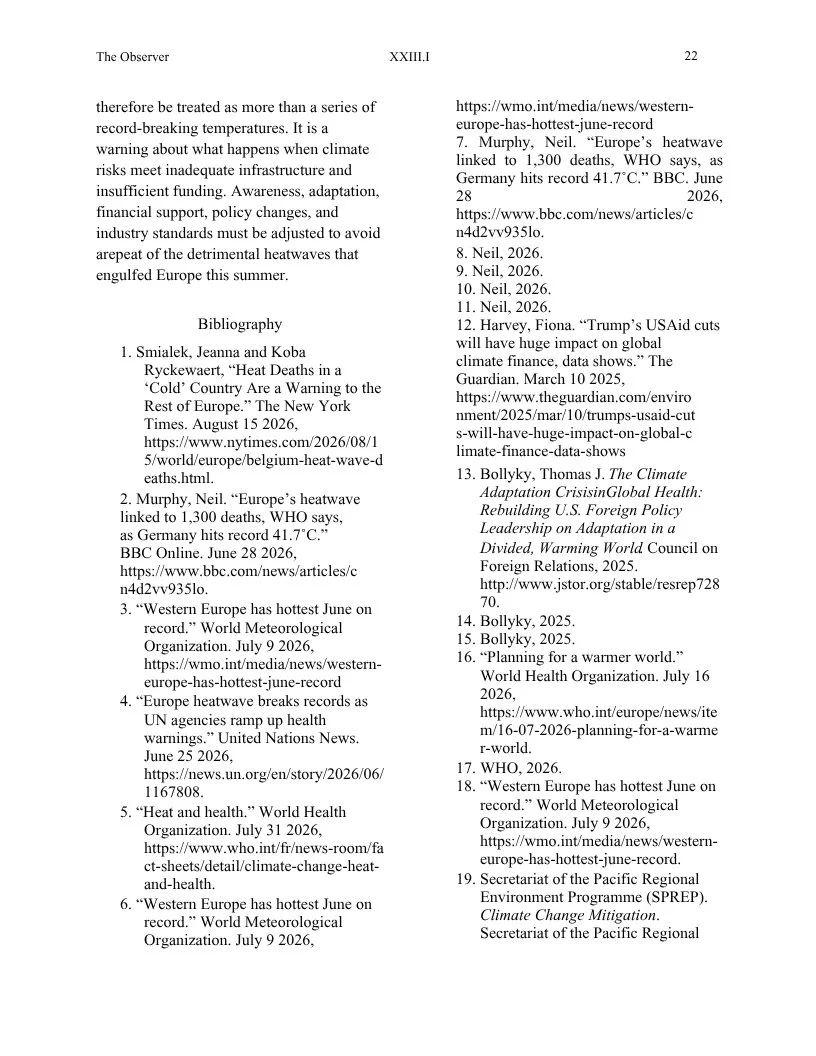
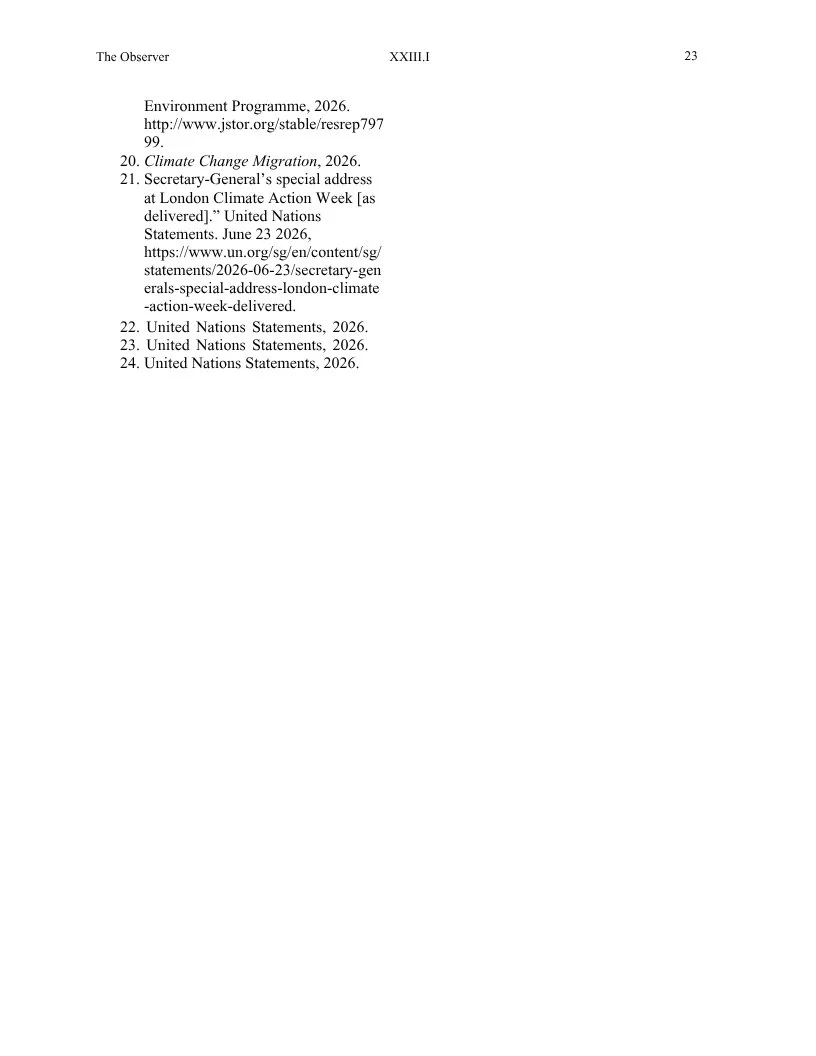
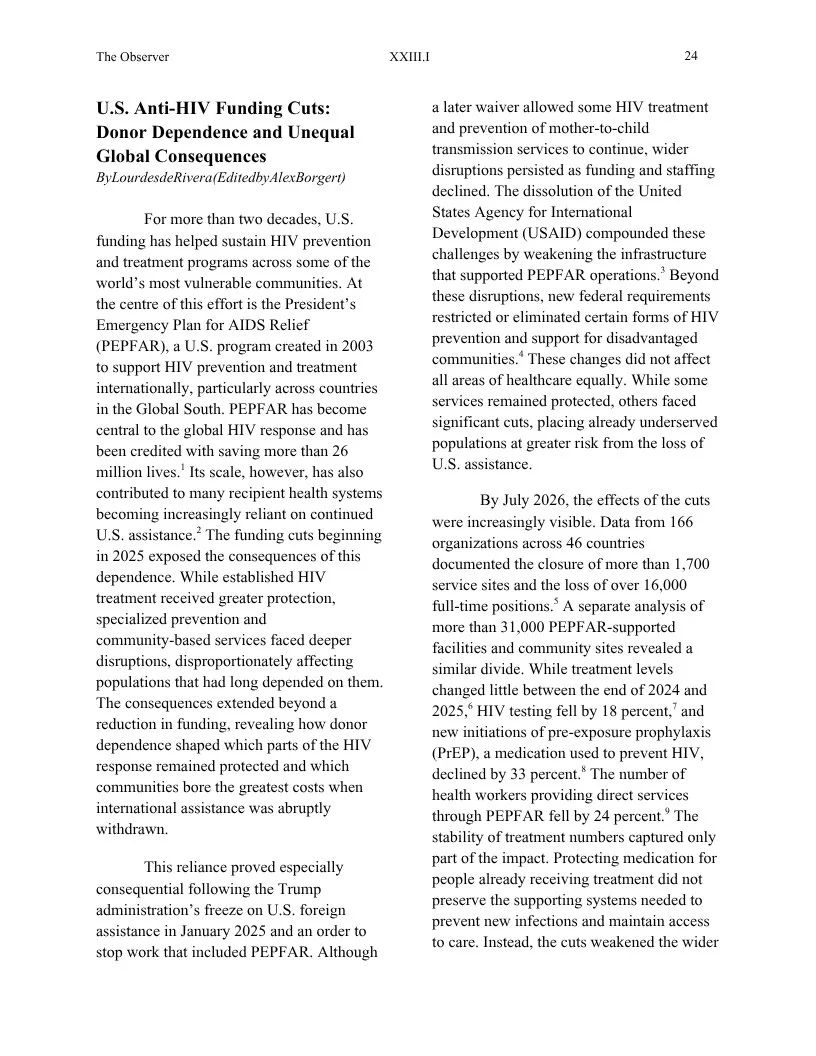
In the months between May and August 2026, population health came under immense strain, responding to political, environmental, and economic changes on the global stage. This May, the Democratic Republic of the Congo (DRC) declared an outbreak of Ebola amidst ongoing regional conflict. The outbreak has devolved into the second-largest Ebola outbreak in history, requiring international intervention. Around the same time, Europe experienced record-breaking heatwaves, which caused thousands of deaths, impacting certain demographics more than others. This summer also saw an increase in violence against health care systems; attacks to healthcare infrastructure in Ethiopia amidst intense armed conflict has left Tigray’s healthcare system on the brink of collapse. Drastic cuts to American international aid have led to setbacks in tackling the HIV/AIDS epidemic, raising questions about who will fill the gap in critical humanitarian funding.
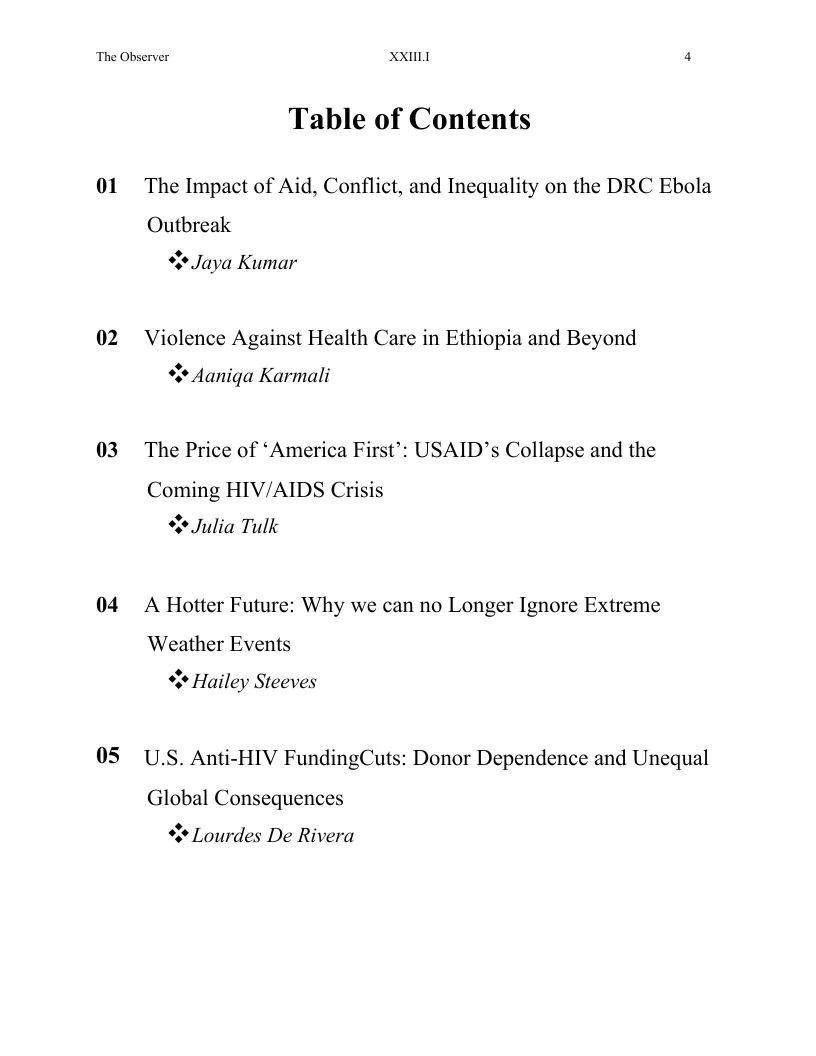
Our contributors have approached these stories with the analytical care they deserve. Jaya Kumar explores how the Ebola outbreak in the DRC has placed pressure on an already-strained healthcare system, revealing a dependence on international organizations and foreign aid to combat public health crises. Hailey Steeves highlights the need for countries to commit to climate change mitigation in order to prevent further climate and health emergencies. Aaniqa Karmali sheds light on violence against healthcare systems as a growing strategy of war, unpacking the implications of this trend for International Humanitarian Law. Julia Tulk proposes alternatives to USAID in the fight against HIV/AIDS, while Lourdes de Rivera emphasizes the communities most vulnerable to the repercussions of the PEPFAR freeze.